Part orientation for strength: use layers, walls, and force paths intentionally
اتجاه القطعة للقوة: استخدم الطبقات والجدران ومسارات الحمل بوعي
By Let’s 3D Studio · 3 min read
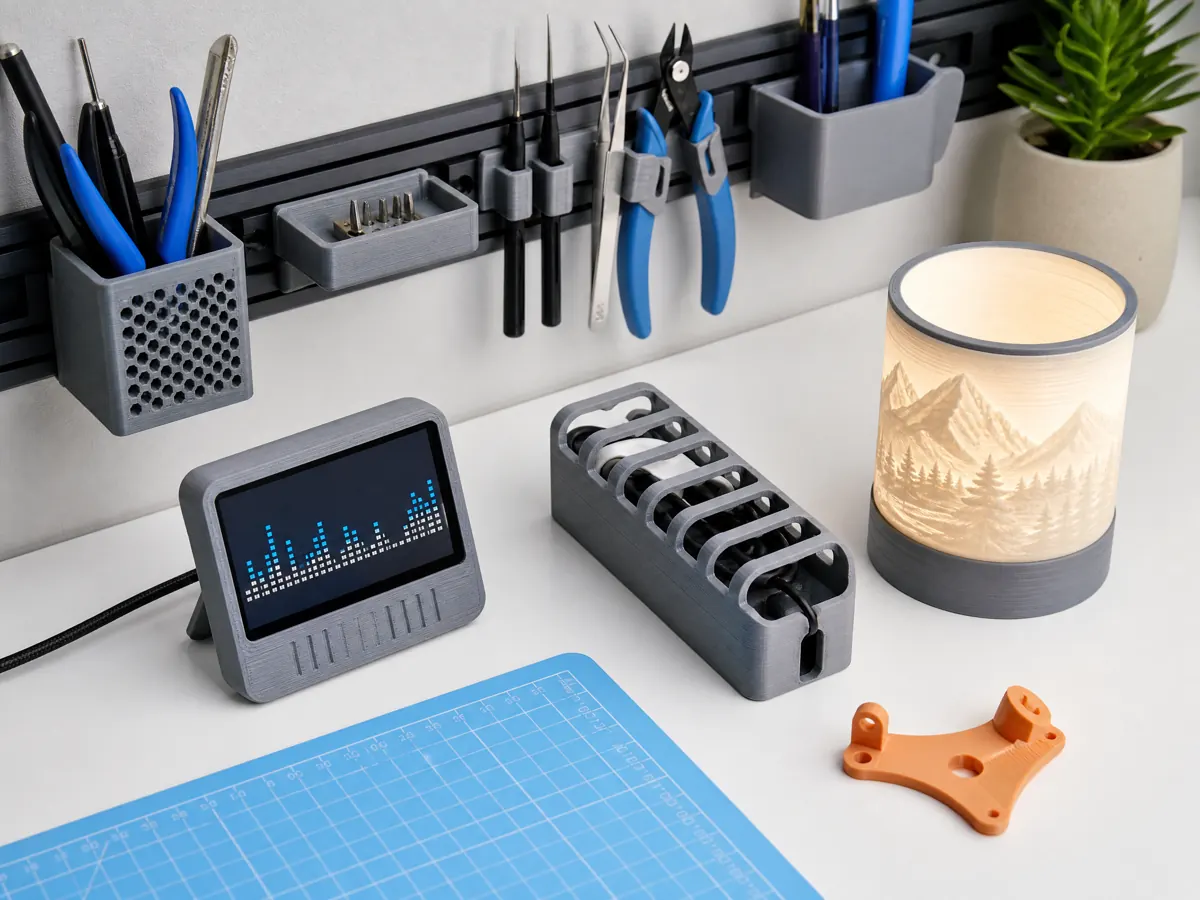
A printed part is not equally strong in every direction. FDM lays adjacent roads of polymer and stacks those roads into layers. The bond between layers can be the most vulnerable direction for a loaded part, especially if temperature, cooling, material dryness, or flow are not well controlled. Orientation is therefore a structural decision made before the first layer begins.
Map the force before choosing a face
Ask where force enters the part, where it leaves, and whether the load is tension, bending, impact, compression, or repeated flexing. For a hook, the critical region may be the curve where the load pulls away from the wall. For a bracket, it may be the root near a mounting screw. Orient the model so the main tensile path crosses continuous perimeters and layers as favorably as practical.
There is no single strongest orientation because support, surface finish, dimensional accuracy, and print time also matter. A part placed flat may have a strong broad base but may split along layers under a vertical pull. Standing it up may align layers more favorably for that pull while increasing support needs and print time. The right answer comes from the service load.
Walls do more than dense infill
For many functional FDM parts, increasing perimeter count is a more effective strength strategy than making the entire interior solid. Walls follow the outside geometry and carry load efficiently. Ribs, fillets, gussets, and gradual thickness changes can move stress away from sharp corners. Dense infill can add material but may not reinforce the most critical path.
| Design move | Why it helps |
|---|---|
| Add a fillet at a bracket root | Reduces stress concentration at the inside corner |
| Add walls before dense infill | Places more continuous material near the loaded perimeter |
| Orient for the main load path | Reduces reliance on weaker layer-to-layer separation |
| Add a rib or gusset | Increases stiffness without making the entire part solid |
Material and process conditions still matter
PLA can be stiff and easy to print but may soften in warm environments. PETG can provide more toughness for everyday fixtures. ABS, ASA, nylon, and engineering materials require the right thermal environment, enclosure, ventilation, and hardware capability. Choose material based on service conditions and follow the supplier’s guidance. A strong orientation cannot make an unsuitable polymer safe for heat, UV, food contact, or load-critical use.
Use a dry spool, a stable temperature profile, and enough cooling for the geometry without chilling the layer bond. If the part is safety-critical, carries people, secures heavy loads, or is part of a regulated system, do not rely on a hobby print without appropriate engineering review and testing.
Test the loaded geometry
Print a small representative coupon or a reduced version of the critical feature in two orientations. Apply a controlled, safe load and inspect where it bends or fractures. This is not certification, but it is better evidence than choosing an orientation from appearance alone. Treat orientation, walls, material, and geometry as one design system and functional prints become far more predictable.