Direct drive vs Bowden extruders: control, weight, and material behavior
الدفع المباشر أم Bowden: التحكم والكتلة وسلوك الخامات
By Let’s 3D Studio · 3 min read
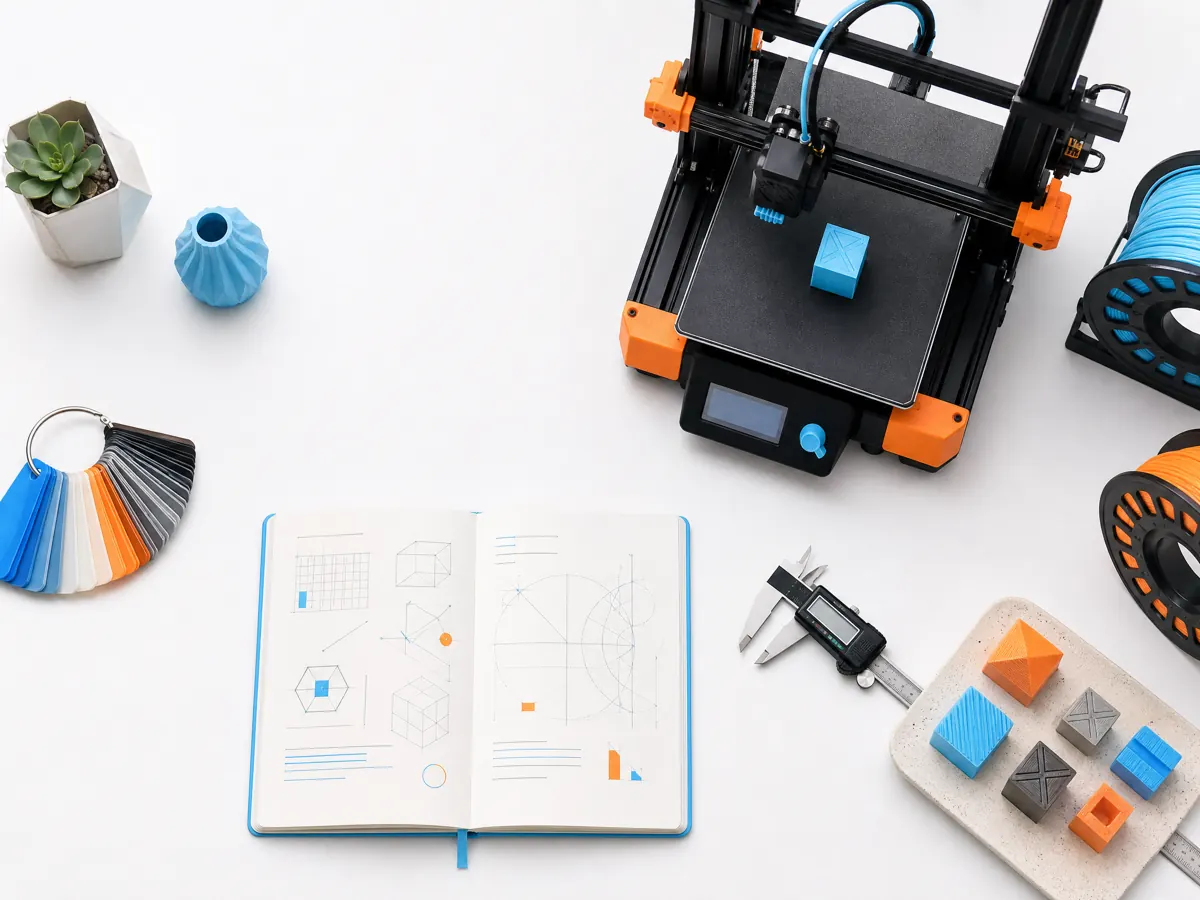
An extruder pushes filament into a hotend. In a direct-drive design, the drive gears sit close to the hotend. In a Bowden design, the drive gears are mounted away from the moving toolhead and push filament through a guide tube. Both layouts can print excellent PLA and PETG parts; their practical difference is the length and compliance of the filament path.
The direct-drive trade-off
Direct drive shortens the path between the drive gears and melt zone. This usually makes flexible filament easier to control and can allow shorter, more predictable retractions. The trade-off is moving mass. A heavier toolhead can require more conservative acceleration and can reveal ringing or layer shifts if the motion system is pushed beyond its comfortable range.
Direct drive is often a sensible choice when TPU or other flexible material is a regular part of the work. It is not necessary for every maker. A direct-drive conversion also changes cable routing, cooling, and motion load, so use a well-supported design and retune the profile after installation.
The Bowden trade-off
Bowden systems keep the toolhead light. This can support quick changes of direction and reduce the inertia that the X axis must manage. The longer path means the filament compresses and moves slightly inside the tube before extrusion responds, which often needs more retraction distance and careful tuning. Flexible materials may buckle in that path if the drive and guide system are not designed for them.
| Workflow need | Often easier starting point |
|---|---|
| Frequent flexible filament | Direct drive |
| Lightweight moving toolhead and common rigid filaments | Bowden |
| Existing reliable printer | Keep the current design and tune it before converting |
| A conversion project | Use manufacturer or trusted design documentation and revalidate motion settings |
Retraction is a symptom, not the entire decision
Direct drive commonly uses a shorter retraction distance; Bowden commonly needs more. There is no universal number because tube length, gear ratio, hotend design, material, and temperature matter. Tune retraction with a small stringing test, changing one parameter at a time. Excessive retraction can pull softened plastic into a cooler zone and contribute to a jam, so do not treat a higher value as automatically better.
Choose for the system you maintain
If your current Bowden printer produces clean PLA and PETG parts, learn its baseline before changing hardware. If flexibility is central to your work and the manufacturer supports a direct-drive configuration, the shorter path may be worth the motion trade-off. In either case, verify belt tension, acceleration, temperature, retraction, and cooling after a change. The most capable extruder arrangement is the one that matches the materials you use and has a documented, stable profile.